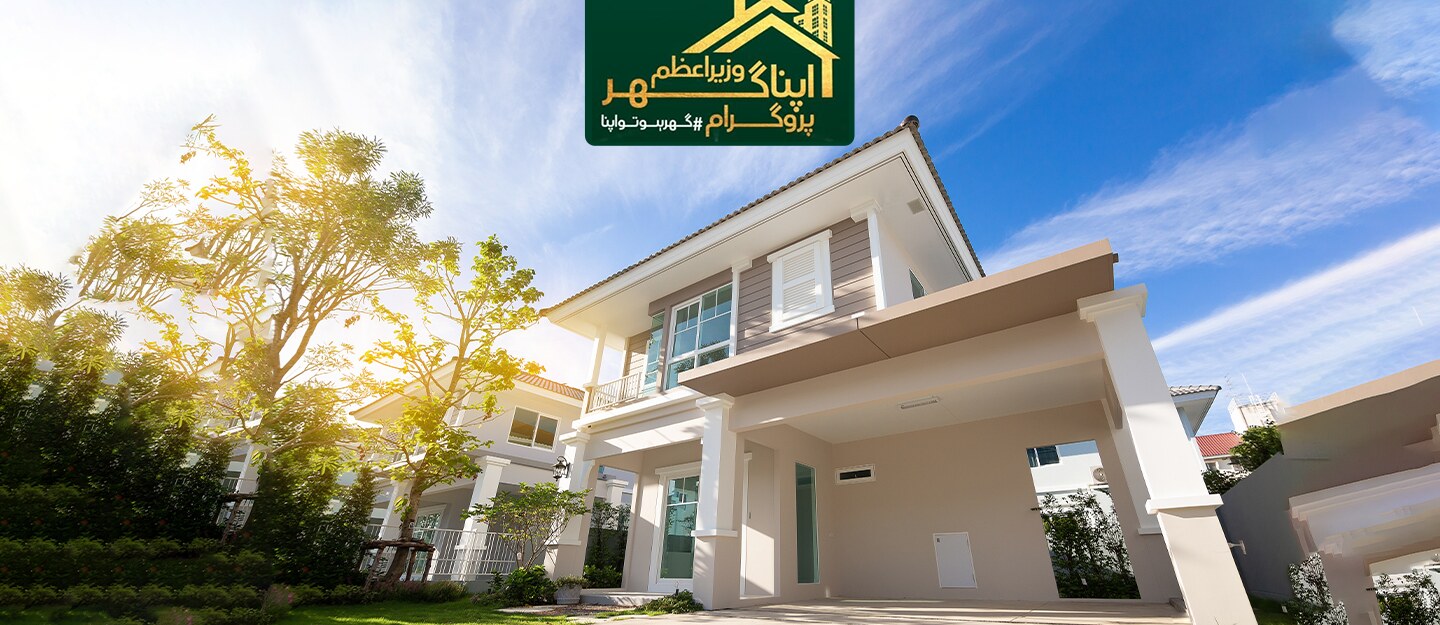
Home » Property » PM Apna Ghar Programme: A Practical Guide for First-Time Home Buyers
For millions of Pakistani families who’ve spent years paying rent and quietly wondering if they’ll ever own a home, the Wazir-e-Azam Apna Ghar Programme (commonly referred to as the PM Apna Ghar Programme) is one of the most significant government efforts in recent memory to make that dream feel genuinely reachable.
Here’s everything you need to know, written plainly.
What Is This Programme, Really?
Launched by Prime Minister Shehbaz Sharif as part of a federal initiative to address Pakistan’s housing crisis, the scheme aims to provide low- and middle-income households with affordable housing finance. The overall plan targets 500,000 housing units over five years, at an estimated cost of Rs. 3.2 trillion, to bridge the gap between rising property prices and what ordinary families can afford.
It’s not a handout. It’s a subsidised loan scheme, delivered through participating banks, with the government picking up the difference on your markup rate in the early years.
The Numbers That Matter
The scheme offers housing finance for up to 20 years, including a 10-year subsidy period, at a subsidised markup rate of 5% for the first ten years. After that, the rate shifts to a market-linked markup. Participating banks provide up to 90% of the property value, meaning you only need to contribute 10% as initial equity.
Loan limit: Up to PKR 10 million
Your down payment: 10% of property value
Markup: 5% fixed for first 10 years, then market rate
Repayment period: Up to 20 years
Who Can Apply?
The eligibility criteria are fairly clear, though the income minimums vary slightly by bank.
Applicants must be between 25 and 60 years of age, and the loan must mature before age 60 for salaried individuals and 65 for self-employed applicants.
All men and women holding a valid CNIC are eligible, provided they are first-time homeowners and do not own any housing unit in their name.
The minimum income requirement for the primary applicant is PKR 25,000 per month, and PKR 20,000 for any co-applicant. (Note: some banks set a higher threshold, so confirm with your branch.)
Property size limits: The scheme covers houses of up to 10 Marla (2,720 sq. ft.) and flats of up to 1,500 sq. ft.
Employment requirements vary by bank, but as a general guide, self-employed businesspeople need a minimum of 3 years’ proof of business, salaried employees need at least 2 years of employment, and contractual government employees need a minimum of 3 years.
Where It Applies
The scheme is available to applicants from all four provinces, the federal capital, Gilgit-Baltistan, and Azad Jammu and Kashmir.
How to Apply
The application process is bank-driven; you don’t need to go through a government portal. You can apply through any participating commercial bank, Islamic bank, or microfinance institution. Most major banks across the country are on board, so your first step is simply visiting the nearest branch that participates in the scheme.
What to bring:
Valid CNIC
Proof of income (salary slip or business documents)
Bank statements (last 6 to 12 months)
Property documents (if you already have a plot)
Utility bills
Passport-sized photographs
The bank will assess your Debt Burden Ratio (DBR), which must not exceed 33% of your net monthly income, and will check your ECIB credit history. A clean credit record is essential.
A Few Things to Keep in Mind
Property valuation will be conducted through the bank’s approved evaluator. You can’t just present your own estimate.
The scheme covers residential use only, not investment or rental properties.
Loan disbursement for construction projects typically happens in phases, tied to construction progress.
Watch out for unofficial agents or middlemen who claim to fast-track applications. The process is bank-managed and straightforward enough to handle yourself.
The Bigger Picture
The scheme is supervised by the Ministry of Housing and Works, with monthly progress reports submitted directly to the Prime Minister. Beyond housing, it is expected to stimulate over 40 allied industries, including cement, steel, and construction labour.
For families currently renting, this programme represents a realistic path to ownership, provided you meet the income requirements, have a clean credit history, and can manage the monthly instalments. Apply early, go directly through a participating bank, and make sure your documents are in order before you walk in.
Share
Samra Zulfiqar
Samra Zulfiqar, a real estate analyst at Zameen.com, is passionate about finding projects that offer buyers the best returns. Her keen insights spotlight the market’s most promising opportunities.