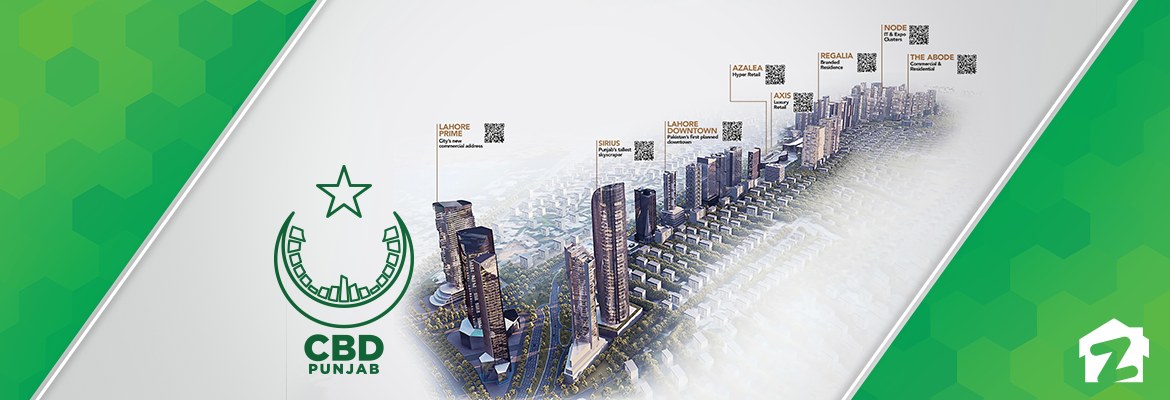
Lahore: The Punjab Central Business District Development Authority is planning to expand its central business district (CBD) model to major cities including Rawalpindi, Faisalabad, and Multan, following strong investor response to its flagship development in Lahore.
In an interview with Wealth Pakistan, CBD Punjab Chief Executive Officer Imran Amin said the authority is currently undertaking feasibility studies and strategic planning to replicate the model across key urban centres in the province. The broader plan also includes Gujranwala, Sialkot, and Bahawalpur.
The proposed expansion aims to centralise economic activity, develop modern commercial hubs, and attract both domestic and international investment. It is also intended to support more balanced and sustainable urban growth across Punjab by creating new economic nodes beyond Lahore.
Amin noted that the Lahore CBD project has already entered an active development phase, with major components such as Route 47, CBD Walk, and CBD Arena taking shape. He said the project reflects a transition from planning to on-ground execution, supported by international master planners and private sector participation.
According to the authority, establishing a network of CBDs could strengthen Punjab’s economic landscape by generating new business activity, improving infrastructure, and enhancing the province’s investment appeal.
Urban planning experts, however, stress that the success of such districts will depend on how well they are aligned with each city’s economic strengths. Dr. Nasir Javed, former CEO of the Punjab Urban Unit, said CBDs can contribute to productivity and economic growth if tailored to local value chains. He cited examples such as textile services in Faisalabad, back-office and technology services in Rawalpindi, and logistics and agri-processing in Multan.
He added that while CBDs have historically played a central role in the development of cities in countries like the United States, their effectiveness depends on more than just physical infrastructure. Strong institutions, efficient transport systems, regulatory clarity, and skilled human capital are equally critical.
Javed emphasised that Pakistan should focus not only on replicating the physical design of international CBDs but also on adopting their functional principles, including mixed-use development, transit-oriented planning, and integration with competitive economic sectors.
The expansion plan is still in early stages, with detailed feasibility assessments expected to guide timelines, investment structures, and city-specific development strategies.
Samra Zulfiqar, a real estate analyst at Zameen.com, is passionate about finding projects that offer buyers the best returns. Her keen insights spotlight the market’s most promising opportunities.