Islamabad: Pakistan and China will revise the China-Pakistan Economic Corridor (CPEC) Long-Term Plan (2017-2030) during FY2026-27 to incorporate the priorities of the CPEC 2.0 framework, expanding cooperation beyond infrastructure into areas such as digital technology, space, green development and research.
According to official planning documents, the updated roadmap will be aligned with CPEC 2.0’s five corridors; Growth, Innovation, Green, Livelihood and Openness/Regional Connectivity. It will also integrate cooperation under China’s Global Development Initiative (GDI) and Global Civilization Initiative (GCI), with a focus on joint research, digital and space collaboration, and educational and vocational exchanges.
The revision follows an agreement reached during the 14th Joint Cooperation Committee (JCC) meeting to review the existing CPEC Long-Term Plan in line with the five-corridor framework. Inter-agency consultations on the revised plan are currently under way.
The Annual Plan 2026-27 states that both countries will strengthen the Joint Working Group (JWG) mechanism by adopting a calendar of meetings and a standardised reporting framework to improve coordination and implementation.
In the energy sector, Pakistan will pursue energy efficiency and conservation initiatives while undertaking a study to identify and rank potential sites for pumped-storage hydropower projects to support energy storage, grid stability and renewable energy integration.
Industrial cooperation will focus on operationalising and marketing four priority Special Economic Zones (SEZs)—Rashakai, Allama Iqbal Industrial City, Dhabeji and Bostan. Progress is also expected on the Karachi Industrial Park, the Islamabad Model SEZ and the Moqpondass SEZ in Gilgit-Baltistan, while commercial sales at Dhabeji SEZ are planned during the fiscal year.
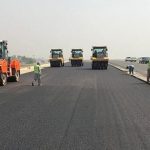
Railway modernisation will remain a strategic priority under CPEC 2.0, with the ML-1 upgrade at the centre of the agenda. The government is exploring third-party financing for the Karachi-Rohri section while pursuing Chinese financing for the remaining sections.
The plan also prioritises a joint feasibility study for the proposed Gwadar-Nokundi Mining and Mineral Corridor, alongside feasibility work on four transport projects, including the D.I. Khan-Zhob section of the N-50, the Mirpur-Mangla-Muzaffarabad Expressway, the M-10 Motorway and the Babusar Tunnel.
In Gwadar, efforts during FY2026-27 will focus on commercialising the port and free zones, attracting investors and relocating Chinese enterprises. The government also expects progress on the Gwadar Safe City Project and the 300MW Gwadar Coal Power Plant.
Science and technology cooperation will include the operationalisation of joint laboratories and research centres, expansion of the China-Pakistan Knowledge Corridor, and continued development of the China-Pakistan Joint Research Center on Earth Sciences at Quaid-i-Azam University, including the installation of an advanced mountain disaster early warning system targeted for completion by June 2027.
Samra Zulfiqar, a real estate analyst at Zameen.com, is passionate about finding projects that offer buyers the best returns. Her keen insights spotlight the market’s most promising opportunities.